October 2 | Moments Almanac | Amish
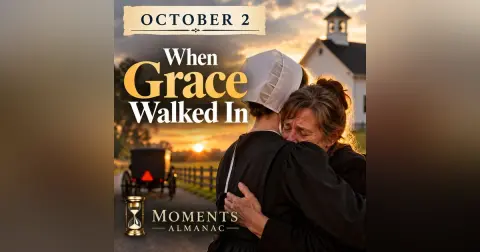


On October 2, 2006, tragedy entered a one-room Amish schoolhouse in Nickel Mines, Pennsylvania. Five young girls lost their lives, five others were wounded, and a quiet community was plunged into unimaginable grief.
But within hours, something remarkable happened.
Members of the Amish community reached out to the family of the man responsible—not with hatred or demands for revenge, but with compassion and forgiveness. They comforted his parents, embraced his widow and children, attended his funeral, and in the years that followed, some formed lasting relationships with his family.
The world struggled to understand it.
In this episode of Moments Almanac, we remember not the violence of that October morning, but the grace that followed it. It is a story about forgiveness that does not deny evil or minimize pain, but refuses to allow either one to have the final word.
Perhaps forgiveness isn't something we wait to feel. Perhaps it is a way of life we practice long before the moment comes when it costs us everything.
“They simply refused to let evil decide what kind of people they would become.”
📖 Matthew 6:12 — “Forgive us our debts, as we forgive our debtors.”
Welcome to Moments Almanac for October 2nd. On this day in 2006, Evil walked into a little one-room Amish schoolhouse in Nickel Mines, Pennsylvania. By the end of the morning, five young girls were dead, five more were wounded, and the gunman had taken his own life. But what happened next is the reason we remember this story today. Before the sun went down, members of the Amish community began walking toward the family of the man who had done it. Not with threats, not with accusations, with compassion. Amish neighbors visited the gunman's parents. Others reached out to his widow and children. One Amish neighbor approached the shooter's grieving father, put his hands on his shoulders, and offered words of love and forgiveness. And somehow, in the middle of unimaginable darkness, Grace walked through the door. The world noticed. Within a day, the story of Amish forgiveness had appeared in thousands of news reports around the world. People could understand anger, they could understand revenge, but this needed explaining. An Amish bishop later said that forgiveness did not require a meeting or a committee. For them, he said, it was already a decided issue. Jesus had told him what to do. Forgive us our debts as we forgive our debtors. Matthew 6, 12. That didn't mean their grief disappeared. Forgiveness didn't mean pretending nothing terrible had happened. One Amish mother later explained that forgiveness meant releasing the offender to God and surrendering the right to revenge. And it wasn't merely something they said. Amish families attended the gunman's funeral. Some of the financial gifts sent to help the victims were shared with his widow and children, and over the years, his mother Terry Roberts developed genuine friendships with Amish families touched by the tragedy. The people who had every right to shut the door kept it open. That's what makes forgiveness so difficult. We often think forgiveness begins when the pain finally goes away, but perhaps forgiveness begins much earlier. It begins when we decide what we are going to do with the pain. Hold it, feed it, return it, or place it into the hands of God. The Amish of Nickelmines never said the evil wasn't evil. They simply refused to let evil decide what kind of people they would become. And I believe the greatest tragedy to grace is not what we believe when life is easy. It's what walks through the door when everything has fallen apart. And that's Moments Almanac for October 2nd. I hope you'll join me tomorrow. This was a moment worth remembering. And I believe tomorrow will be too. Until then, take heart. Notice the scattered moments and share the grace.


