Psalm 18 | Psalms Reflections
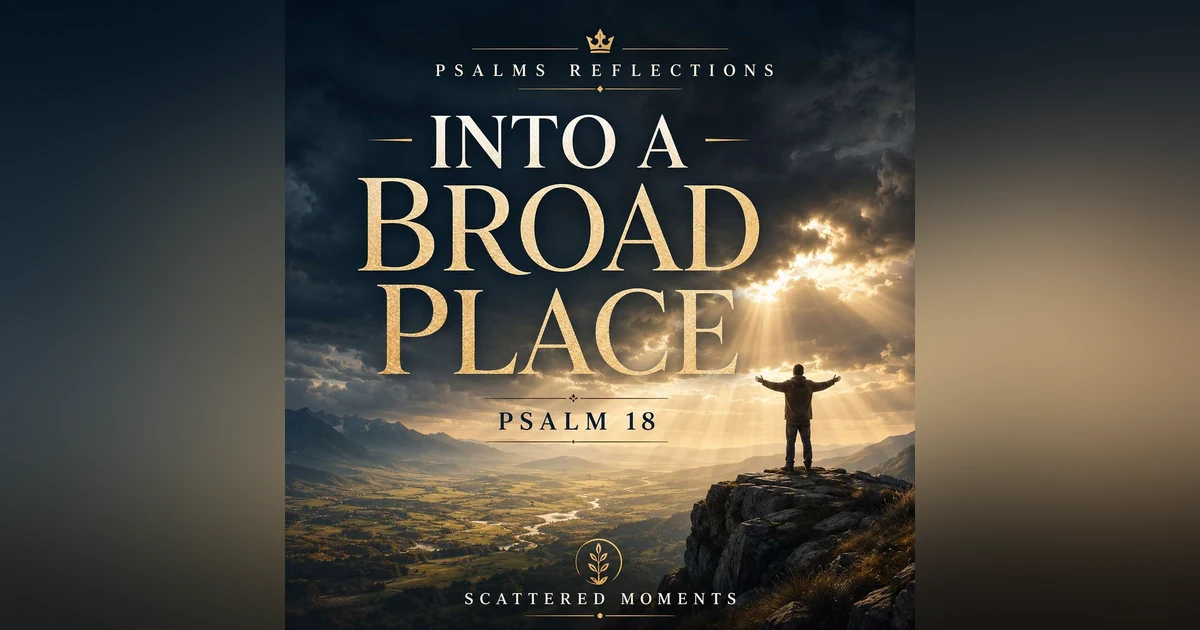


Psalm 18 is David’s great song of deliverance—a testimony to the God who hears the cry of His people, comes near in power, and brings them from distress into a broad place.
This meditation reflects on the rich theology woven through the psalm: God as Rock, fortress, shield, deliverer, and refuge; the dramatic language of theophany as the heavens bend and the earth trembles; the symbolism of God’s right hand as strength and sustaining grace; and the striking confession that God rescues because He delights in His own.
Psalm 18 reminds us that divine power is not distant or impersonal. The God who shakes mountains also stoops to rescue. He gives light in darkness, strength for the wall ahead, and space to breathe when life feels narrow.
The meditation also points toward Christ, the fullest revelation of the God who comes down—gentle, near, and mighty to save.
Stay through the end for an original song inspired by Psalm 18, drawing on its images of the storm, the Rock, the right hand of God, and the broad place of His deliverance.
Take heart. Notice the scattered moments. Share the grace.
Welcome to Psalms Reflections on Scattered Moments. I'm so glad you've decided to take a few minutes to experience Psalm 18 with me. Before we begin, just to note that at scatteredmoments.org you'll find a collection of all the Psalms meditations. And now Psalm 18 into a broad place. For the next few moments, settle yourself. Let your breathing slow. Let the noise of the day move to the edges. You do not have to solve anything right now. You don't have to carry every concern into this moment. Simply become aware of the presence of God. He is here. The God who sees you. The God who hears you. The God who is near. And as you listen to the words of Psalm 18, allow them to become more than words on a page. Let them become a prayer. Let them become rest. Let them remind you who God is. David says, The cords of death encompass me. The torrents of destruction assailed me. Life had become narrow. The pressure was closing in. Perhaps you know that feeling. The season when your thoughts keep circling the same problem. A season when your choices seem limited. A season when your heart feels crowded with fear, grief, uncertainty, or fatigue. David does not begin with an answer. He begins with a cry. In my distress I called upon you. That is enough. A cry. A prayer. A whispered name. And God hears him. Then the song begins to become thunderous. The earth shakes. The mountains tremble. The heavens bend. Lightning flashes. David describes the presence of God with the language of storm and fire. It is the language of Theophany. The God who once shook Sinai comes near again. But after all the thunder, the psalm suddenly becomes tender. David says, He sent me on high. He took me. He drew me out of many waters. God reaches down. Sit with that image for a moment. The God who shakes mountains reaches down for one person. The God of Thunder has a gentle hand. It's gentle enough to rescue. David later says, Your right hand supported me. The right hand is a picture of strength and power. But here God's power is not merely displayed. It is underneath David. It's holding him. It's supporting him. Keeping him from falling. Maybe today you do not need God to explain everything. Perhaps you simply need to know that his hand is under you. And then David says, He brought me out into a broad place. He rescued me because he delighted in me. A broad place. Room. Space. Freedom. Breathing room. Imagine this space, this broad exterior space. The opposite of being trapped. Earlier, David was surrounded by cords, and now he stands in an open place. Earlier, the waters threaten to overwhelm him. And now his feet are secure. And maybe there is some place in your life that feels narrow right now. Some burden. You may not know when the broad place will come, but Psalm 18 reminds us that God is able to bring us there. Sometimes he changes the circumstance. Sometimes he changes us within the circumstance. David says, For by you I can run against a troop. And by my God I can leap over a wall. God does not always remove every wall. Sometimes he gives us strength to climb it. He does not always explain the darkness. David simply says, The Lord my God lightens my darkness. God gives light. Enough for the next step. Enough for the next day. But even more. Enough for this day. Enough for this moment. And through the psalm, David keeps finding new names for God. My rock. My fortress. My deliverer. My refuge. My shield. My stronghold. It's as if David is confessing that one name is not enough. David has known God in too many ways. And perhaps hardship does that. It teaches us names for God we would never learn from a distance. And then David says something surprising. Your gentleness made me great. Your gentleness. God comes down not in storm clouds, but in Bethlehem. Not with thunder, but with mercy. The one who could shake mountains, washes feet, touches the wounded, welcomes the weary, carries a cross. The mighty God stoops, and perhaps the most tender line in this entire psalm is this: He rescued me because he delighted in me. Not reluctantly, not begrudgingly, because he delighted in me. Let that sink in for a moment. You are not an interruption to God. Your prayer is not an annoyance. Your weakness does not surprise him. You can call to him. You can rest in him. You can trust the hand that holds you. And if life feels narrow today, remember the God who hears. The God who comes near, the God who reaches down, the God who lights the darkness. The God whose right hand supports you is still able to lead you into the broad place. Breathe and trust. And for a moment enjoy the silence. Enjoy the breath. I invite you to rest in this song. Psalm eighteen.
SPEAKER_00When the woe surround me, when the darkness closes in, when I grieve the road I've taken, and the weight of all my sins. You bring me to abroad ice because you're kidding.


