The Poison We Choose to Drink
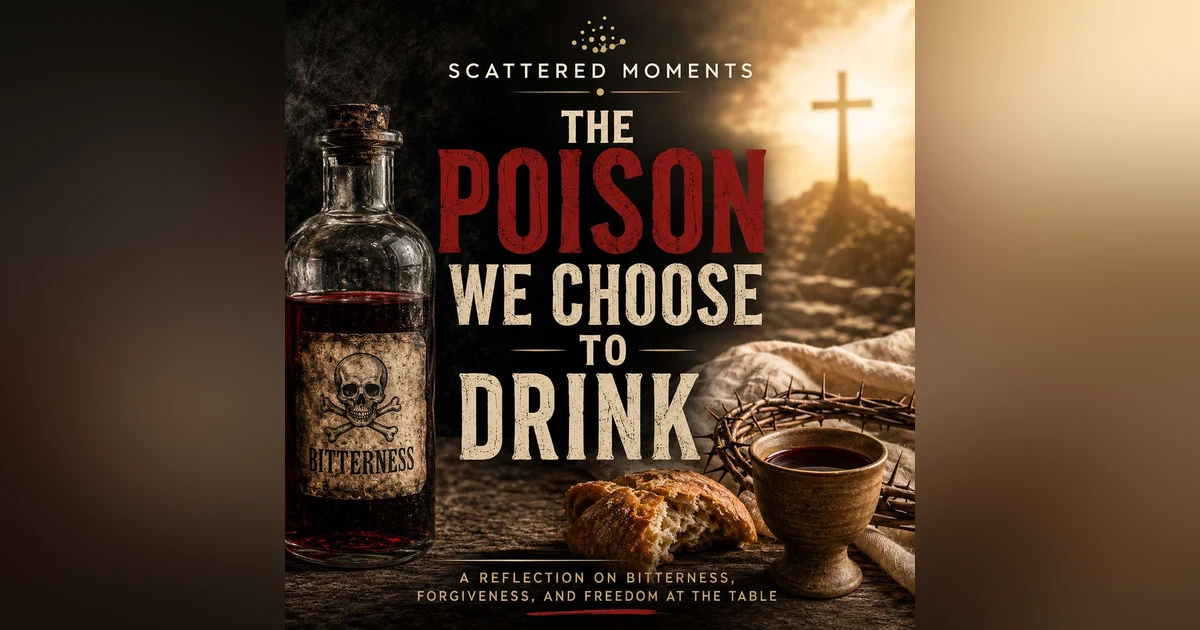
Bitterness rarely announces itself as bitterness. It often disguises itself as justice, hurt, or the quiet conviction that we have every right to hold on just a little longer. In this spoken-word episode of Scattered Moments, Matt Tullos explores the devastating path resentment can carve through hearts, families, friendships, and even churches—and the greater invitation Christ offers at His table. Drawing from Hebrews 12:15 and Ephesians 4:31–32, this poetic reflection reminds us that forgive...


Bitterness rarely announces itself as bitterness.
It often disguises itself as justice, hurt, or the quiet conviction that we have every right to hold on just a little longer.
In this spoken-word episode of Scattered Moments, Matt Tullos explores the devastating path resentment can carve through hearts, families, friendships, and even churches—and the greater invitation Christ offers at His table.
Drawing from Hebrews 12:15 and Ephesians 4:31–32, this poetic reflection reminds us that forgiveness is not pretending the wound never happened. It is choosing to lay our bitterness beside the broken body of Christ and allowing Him to make all things new.
If you've been carrying old hurts, unresolved anger, or the weight of unforgiveness, may this episode encourage you to discover the freedom found only in Jesus.
"See to it that no one fails to obtain the grace of God; that no root of bitterness springs up and causes trouble, and by it many become defiled." — Hebrews 12:15
Welcome to Moments Almanac. My name is Matt Tullis. You know, there are some sins that we recognize immediately pride, lust, greed. But there is another sin that often disguises itself as justice. It whispers, you deserve better. You have the right to hold on to that. Don't forgive. Bitterness never stays underground. It always bears fruit. Several years ago I wrote these words as a reminder to myself that resentment never heals the wound, it simply deepens it. I called it the poison we choose to drink. It's hard to know where the seed of bitterness began. Perhaps before the dawn of man, when an angel of light, heaven's delight wasn't satisfied with reflecting someone else's might. And in bitterness, he shook his fist at his creator. Satan was born the author of scorn, and in bitterness he roams the face of the earth, killing, lying, hating, defying. Bitterness snaked its way into the soul of nations, defiling God's most precious creation. Bitterness born out of shame for justifiable reasons, or so it seems. She left me without a word. He broke my spirit. My father never loved me. No one listened to my side of the story. Someone stepped in and took my glory. The decision was made and I didn't have a choice. You were deflected, neglected, corrected, and resentment brood in a petrid still, intoxicating your life with anger, backbiting, and sorrow, tainting every hopeless tomorrow with bitter nights. You drink your poisonous nectar. You fantasize about your moment of sweet revenge. Flames of rebellion begin to singe every moment of the day. Resentment spoils every part of the road. Instead of running to the healer, we find a place with the killer. Bitterness toils, it spoils, it recoils, it paralyzes fathers and mothers. It incites wars between sisters and brothers. Instead of the church becoming an agent of grace, we choose nails and thorns and spit on Christ's face. That's what we do when we huddle in anger. The devil's our father in Christ is a stranger. It runs through the church, crushing every beautiful thing, God blesses, turns holy moments into public messes. Bitterness doesn't care. Resentment grows like an insatiable feast, killing the bride while feeding the beasts of gossip, evil declaration, an unmerciful generation. It settles in our homes, it crushes our bones, it leads wives into despair, it wounds children, often before they're even aware, of the toxic venom that has settled within them. Bitterness breeds shame. It whispers, I'll never trust you again. It exiles pure joy into the wilderness, making pain out of what once was a marriage of bliss. You see, it was bitterness and pride that sent Jesus to the cross, and yet we listen willingly to it, no matter the cost. It's like a dormant disease waiting for the command of demons. It can bring churches to its knees, families standing before the gallows of open wounds. What once was alive, now nested among the tombs, all because of bitterness. It took root. Malice and rage are its scornful fruit, while well-meaning Christians stand and salute the furious, unfettered rise of scorn born from the seeds of bitterness. But there is another path. It is an invitation not to pretend the wound never happened, not to excuse the one who hurt you, but to lay your bitterness beside the broken body of Christ and leave it there. The table has been set. The invitation is here. An offer of freedom, an offer of blessing, an offer of peace, an offer to turn, an offer of release from bitterness that has been stealing your life. From the anger, the hidden resentment, the quiet strife. This is the meaning of the bread and cup. And this holy moment, let go of regret. Draw near in peace. Banish the rage within you. Return to the one who makes all things new. Every one of us has been wounded. Not every wound becomes bitterness. The difference is what we do with it. We can carry it, or we can carry it to Christ. The cross proves that forgiveness is never pretending the wound didn't exist. It is trusting Jesus to carry what we no longer can. The Apostle Paul wrote, Let all bitterness and wrath and anger and clamor and slander be put away from you. Be kind to one another, tenderhearted, forgiving one another, as God in Christ forgave you today. May every hidden root lose its grip. May the Prince of Peace make room again for joy. Lewis Meads once wrote, Forgiveness is setting the prisoner free and discovering the prisoner was you. Thanks for listening to Scattered Moments. Until next time, take care. Notice the scattered moments. Let go and share the grace.


